
Using Birds of Prey for Pest Control: How Falconry Response Works
Using Birds of Prey for Pest Control: How Falconry Response Works

If pigeons or gulls keep coming back no matter what you install, the problem may not be your deterrent. It may be that the birds have stopped taking it seriously. A live predator is the one thing they never learn to ignore.
What Is Falconry Response?
Falconry response is a bird control service in which a trained handler flies a bird of prey over a site on a planned schedule. The aim is not to catch anything. The presence of a hawk or falcon in the airspace tells pest birds that the site is dangerous, and they move on to somewhere safer.
The birds used are typically Harris hawks, peregrines or falcon hybrids, chosen for the site and the target species. A handler works the bird across problem areas over the course of a visit, then returns at intervals to keep the pressure on. It is a service rather than a piece of equipment, and that difference shapes everything else about it.
Falconry Response Compared With Installed Deterrents
Most sites are choosing between a service and an installation, so it helps to see the two side by side.
| Falconry response | Installed deterrents | |
|---|---|---|
| What it is | Scheduled visits by a handler and bird of prey | Netting, spikes, wires or an automated laser |
| Best at | Dispersing birds already established on site | Keeping a cleared site clear |
| Cost model | Ongoing service fee | Capital cost, then low maintenance |
| Coverage | Wherever the bird is flown | Only the areas treated or in range |
| Works while unattended | No | Yes |
| Habituation risk | Very low, the threat is real | Low for physical barriers and lasers |
| Typical use | Landfill, large yards, open agricultural land | Roofs, ledges, canopies, internal steelwork |
Falconry moves birds off. Proofing stops them returning. Sites that use only one of the two usually end up buying the other eventually.
Which Sites Are Suited to Falconry Response?
Falconry performs best on large, open sites where physical barriers are impractical. That includes landfill and waste transfer sites, where gulls and corvids gather around a food source that cannot be sealed off. It also suits food production and distribution sites with constant vehicle movements and open loading areas, and large industrial and logistics sites where the footprint is simply too big to net.
It works well in agriculture too, particularly for crop protection over open ground during vulnerable weeks of the growing season. Public spaces and event venues are another common use, partly for the results and partly because a visible, non-lethal method reads well with the public.
Where it does not make sense is small enclosed sites, single buildings and specific problem ledges. There is no point paying for repeat visits to solve something a spike strip fixes permanently.
How a Falconry Programme Runs, Step by Step
- 1Site survey. Species present, numbers, roosting and feeding patterns, and the areas causing the most disruption.
- 2Flight plan. A schedule built around bird activity, usually weighted towards dawn and dusk when pest birds are most active.
- 3Intensive phase. Frequent visits at the start, while the birds are still committed to the site.
- 4Review. Population monitoring to measure what has actually changed rather than assuming.
- 5Maintenance phase. Visit frequency reduced as numbers fall, or increased if activity returns seasonally.
- 6Proofing. Physical or laser deterrents installed once the birds have dispersed, so there is nothing to come back to.
What Affects the Cost of Bird of Prey Pest Control?
Falconry is priced as an ongoing service rather than a one-off installation, which is the main thing to understand before comparing quotes.
| Cost driver | Why it matters |
|---|---|
| Site size | Larger sites need longer visits or more than one bird |
| Visit frequency | An established roost needs frequent early visits to break the pattern |
| Programme length | Cost continues for as long as the service does |
| Species and numbers | Gulls and corvids typically need more sustained pressure than pigeons |
| Travel to site | Distance from the nearest handler affects visit cost |
| Access and timing | Dawn, dusk or out of hours working may change the rate |
Key Benefits Include:
Is Falconry Response Legal and Humane?
Yes, on both counts. The bird of prey remains under the control of a trained handler throughout, and the purpose is to create a predator presence rather than to take pest birds.
All wild birds in the UK are protected under the Wildlife and Countryside Act 1981, and non-lethal deterrence is the approach that helps to keep you on the right side of that legislation. Where lethal control is proposed, that sits under the separate licensing system administered by Natural England and is not part of a standard falconry response programme.
Frequently Asked Questions
Need Expert Bird Control Solutions?
If you are dealing with bird related issues on your property, our team at Integrated Bird Management is here to help. Contact us today for expert guidance on sustainable bird control solutions. Our team is always happy to answer any questions you may have or arrange a site assessment.
INTEGRATED BIRD MANAGEMENT: TRADITIONAL BIRD CONTROL
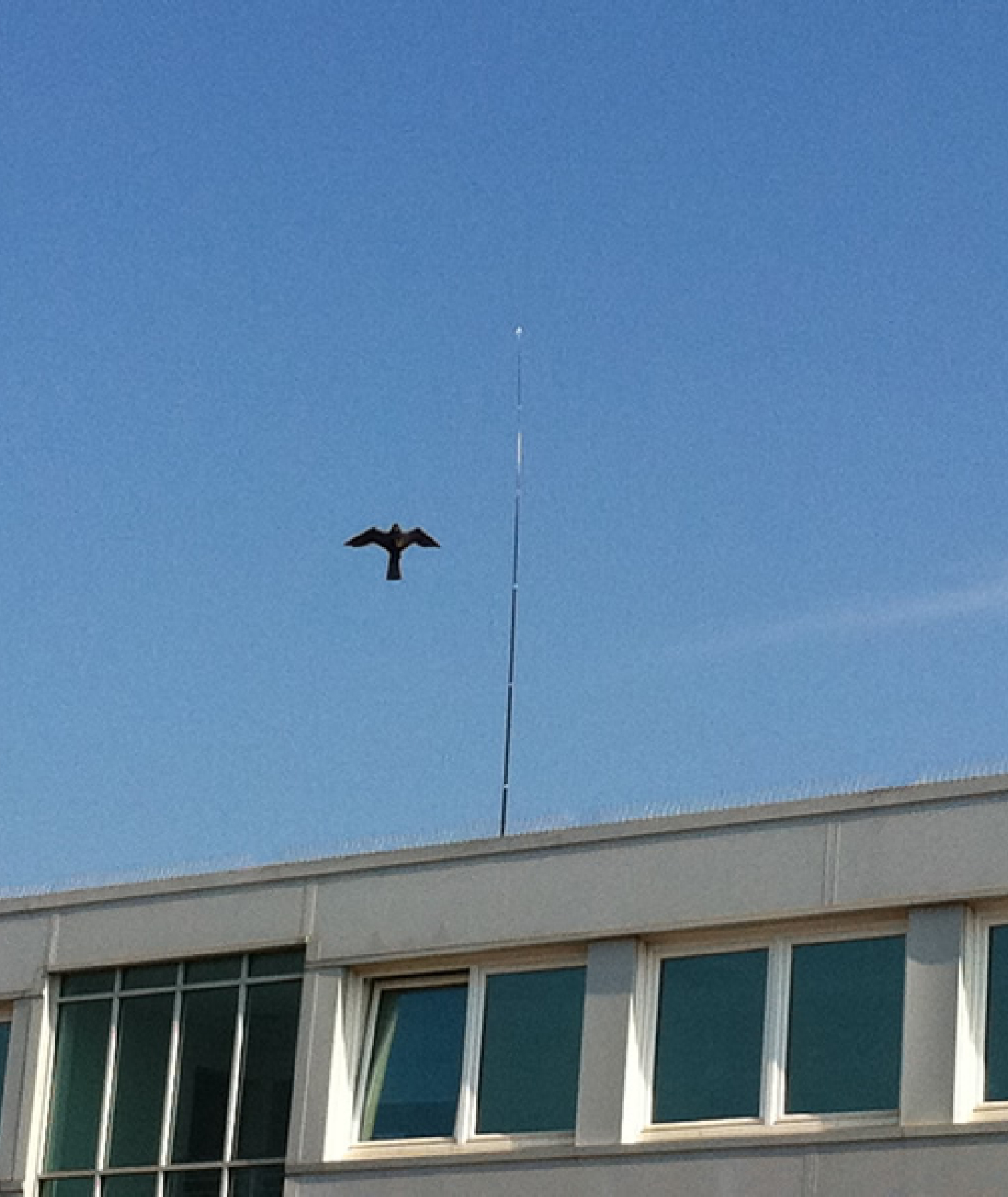
Integrated Bird Management installs bird netting, spikes, mesh, bio-acoustic systems and hawk kites, proven methods that deny birds access to a site and move them on without causing harm. Every installation is specified around the species present, the layout of the building and the level of bird activity involved.
These systems suit almost any property, from warehouse rafters and loading bays to rooftop ledges, vents, signage and open agricultural land. As a BPCA member, all work is carried out in line with industry standards and the Wildlife and Countryside Act 1981.
Key Benefits Include:
Get a Quote
To provide you with the local support that you need, we rely on a network of trusted partners around the world. Please fill out the form below to begin.