
Humane Bird Removal: What It Means and What Is Legal in the UK
Humane Bird Removal: What It Means and What Is Legal in the UK

Humane bird removal gets used to mean two very different things. Some people mean catching birds and releasing them somewhere else. Others mean solving the problem without harming anything. Only the second is realistic, and knowing the difference will save you a wasted month and possibly a legal problem.
In professional practice, humane bird removal means encouraging birds to leave a site of their own accord and then preventing them from coming back. Nothing is caught, nothing is killed and nothing is poisoned. The birds relocate because the site stops offering them what they came for.
What the Law Allows
Wild birds in the UK are protected under the Wildlife and Countryside Act 1981. The table below is the practical summary that most site managers actually need.
| Action | Position under UK law |
|---|---|
| Installing spikes, netting, wires or mesh | Allowed |
| Using laser deterrents or bird scarers | Allowed |
| Falconry response as a deterrent | Allowed |
| Removing food sources and standing water | Allowed |
| Removing a nest that is no longer in use | Generally allowed |
| Disturbing or destroying a nest in use or being built | Offence |
| Catching or taking a wild bird | Offence unless licensed |
| Killing or injuring a wild bird | Offence unless licensed |
| Poisoning or baiting wild birds | Offence, no lawful product exists |
Offences under the Act can carry an unlimited fine and a custodial sentence. Licensing exists for specific circumstances, administered by Natural England and the equivalent bodies elsewhere in the UK, but it is far narrower than most people assume and is not a route open to a typical commercial site.
Why Bird Relocation Does Not Work
Catching and moving birds is far less effective than people expect, which is why it is rarely offered as a service. Pigeons in particular have a strong homing instinct and can return over considerable distances, so releasing them elsewhere usually just delays the problem by a fortnight.
There is a legal dimension too. Taking a wild bird is an offence in itself unless carried out under an applicable licence, so catching birds to move them is not something you or a contractor can do casually. Add the welfare implications of handling and transporting wild birds and relocation stops looking humane at all.
The exception is a single bird trapped inside a building. That is a rescue rather than a pest control situation, and it is dealt with by opening an exit route and letting the bird find its own way out.
Why Bird Bait and Poison Are Not an Option
Searches for bird bait come up regularly, so it is worth addressing head on. Poisoning wild birds is illegal in the UK and there is no over the counter product that lawfully allows it. Using poison also puts pets, other wildlife and, on food sites, your own product at risk.
Homemade deterrent mixtures deserve the same caution. Chemical repellents applied without proper approval can harm non-target species and are frequently ineffective, which is a poor combination on both counts.
Myths and Facts
| What people believe | What is true |
|---|---|
| “Ultrasonic devices move birds on” | Pest bird species do not hear those frequencies. The devices do nothing. |
| “A plastic owl will do the job” | Static decoys are ignored within days once nothing happens. |
| “Spikes injure birds” | Spikes prevent landing rather than causing harm. |
| “Gel repellents solve an infestation” | They are a supplement to physical proofing, not a replacement for it. |
| “You can seal the gap whenever you like” | Not while a nest is in use behind it. |
| “The birds will move on by themselves” | Sites that worked once are reused, usually by more birds. |
Methods That Actually Work
Everything reliable falls into three categories, which are exclusion, deterrence and removing the attraction.
Exclusion is the strongest of the three. Netting creates a complete barrier over roofs, courtyards and internal steelwork, mesh closes vents, eaves and gaps, and spikes make ledges and parapets impossible to perch on.
Deterrence covers the areas exclusion cannot reach. A moving laser beam is perceived as a threat and clears large open spaces without physical barriers, while falconry response uses a live predator presence to disperse populations that are already well established.
Removing the attraction is the part sites skip and then wonder why the birds return. Securing bins, clearing spillage, fixing leaks and dealing with standing water takes away the reason the birds chose you in the first place.
Timing: When Removal Can Happen
The nesting season is the single biggest constraint on any bird removal work. Once a nest is in use it is protected, regardless of how inconvenient its location is, and blocking access to an active nest creates a welfare problem and a legal one at the same time.
| Period | What is usually possible |
|---|---|
| Autumn and winter | The best window. Full proofing, nest removal where nests are empty, netting and spike installation. |
| Early spring | Act quickly before nesting starts. Proofing now prevents a season of problems. |
| Late spring and summer | Peak nesting. Deterrence in unaffected areas only, active nests left undisturbed. |
| Late summer | Proofing resumes once young have fledged and nests are confirmed empty. |
Dates shift by species, and mild winters can extend the season, so confirm the position on site rather than working to the calendar. For nests specifically, see our guidance on whether you can legally remove a bird’s nest.
Need Expert Bird Control Solutions?
If you are dealing with bird related issues on your property, our team at Integrated Bird Management is here to help. Contact us today for expert guidance on sustainable bird control solutions. Our team is always happy to answer any questions you may have or arrange a site assessment.
Frequently Asked Questions
Ready to explore laser bird control for your facility?
Contact our specialists today for a free site survey and discover why UK businesses trust laser technology for long-term bird management success.
Integrated Bird Management: Laser Deterrents
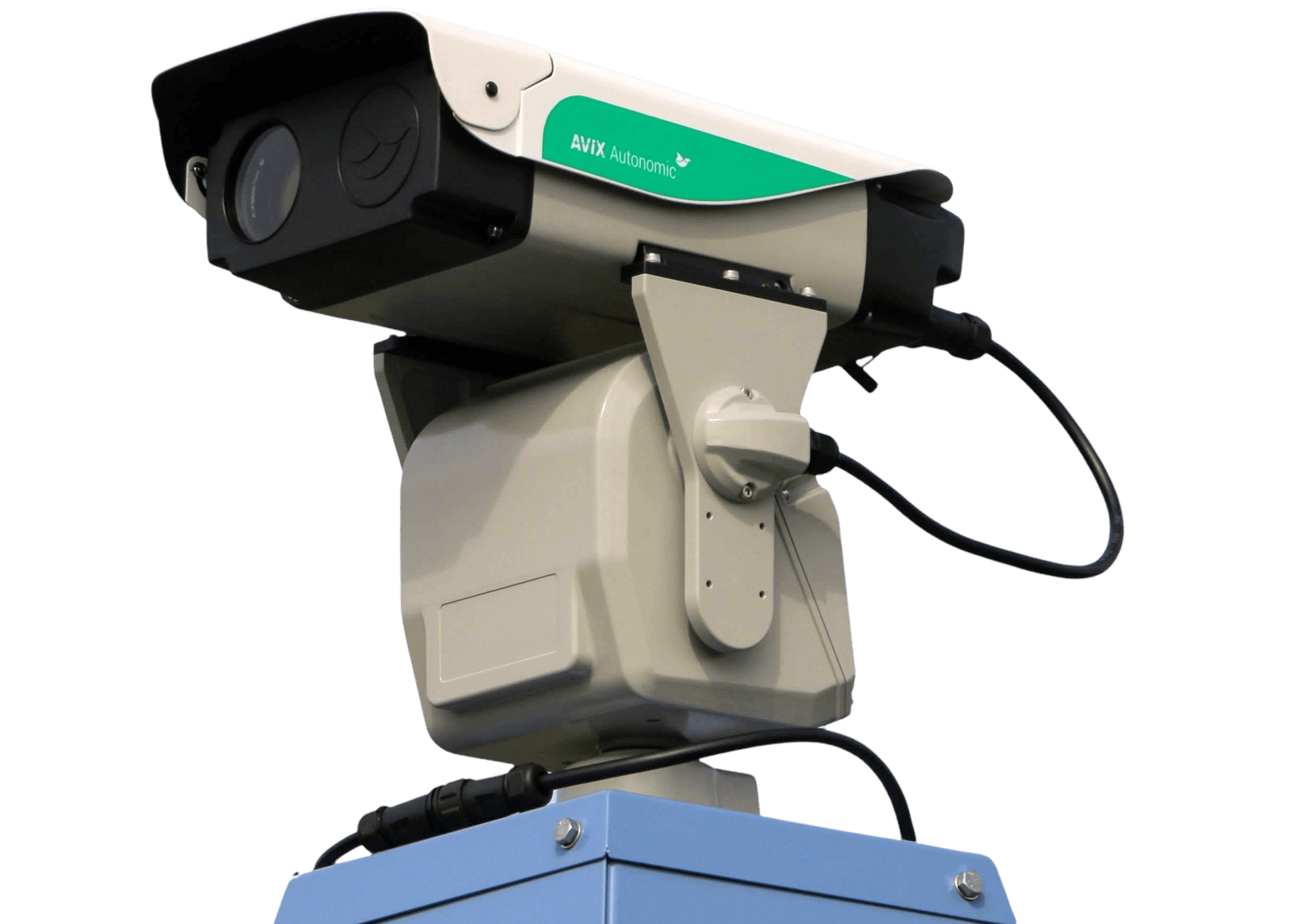
Integrated Bird Management offers the AVIX Autonomic Mark II, an advanced laser bird deterrent that provides continuous, automated protection against nuisance birds. Birds see the laser as a physical threat and immediately leave the area, making this a highly effective and humane solution.
Unlike traditional methods, the AVIX Autonomic is silent, preventing noise disturbances, and birds do not become accustomed to it, ensuring long term success. With low maintenance requirements, the system operates efficiently with only a laser bulb replacement every 3-5 years.
Key Benefits Include:
Get Advice Before You Act
If birds are nesting or roosting on your property, a short conversation now can save a costly mistake later. Please fill out the form below to begin.