
Traditional Bird Control Systems
Traditional Bird Control Systems
Reliable Bird Control Solutions for Every Environment
Birds create problems on all types of property. Droppings corrode surfaces, block drainage, and present health risks. Nesting debris clogs gutters and ventilation systems. On farms, droppings contaminate crops and feed. In warehouses and food-handling environments, an active infestation can carry compliance and reputational consequences.
Traditional bird control systems address these problems through physical exclusion and behavioural deterrence. Bird netting, spikes, mesh, bio-acoustic systems, and hawk kites are proven methods that deny access, discourage roosting, and move birds on without causing them harm.
These systems are installed across a wide range of properties – agricultural land, industrial rooftops, schools, retail units, construction sites, and private buildings. Each installation is tailored to the species present, the layout of the site, and the level of activity involved.

Trusted & Accredited Bird Control Specialists

Trusted & Accredited Bird Control Specialists
A Solution For Every Bird Control Problem
Protect your spaces with tailored bird control methods. From nets and spikes to advanced bio-acoustic systems, hawk kites, and durable mesh, these solutions keep birds away from rooftops, ledges, and open areas – ensuring clean, safe, and bird-free environments.
As a BPCA member, all work is carried out in line with industry standards and UK wildlife legislation.
Bird Nets
Bird netting is one of the most effective bird control solutions for blocking access to any area where birds might try to enter or nest. A network of strong, discreet netting creates a physical barrier that prevents birds from entering confined spaces while still allowing air and light to pass through.
This solution is perfect for protecting rooftops, warehouse rafters, loading bays, hangars, and other large open enclosures. Our bird nets are made from durable, UV resistant materials that withstand the elements, ensuring long term bird deterrence with little to no maintenance.
Once installed, nets provide immediate relief from bird infestations, keeping birds out. For guidance on what installation involves, see our article on how bird nets are installed.

Bird Spikes
Bird spikes provide a simple, cost effective way to prevent birds from perching on ledges, beams, signs, and other narrow surfaces. These deterrent strips have small upward pointing rods that make it impossible for birds to land without causing them harm. Made from durable materials like stainless steel or polycarbonate, bird spikes are weatherproof, rust resistant, and can last for years.
They are virtually maintenance free once installed. Bird spikes are especially ideal for areas prone to heavy bird activity; such as building ledges where pigeons gather, rooftop edges favoured by seagulls, or street signage that attracts roosting.
This traditional bird control method is humane, discreet, and highly effective at protecting your property’s surfaces from staining and corrosion while maintaining its appearance.
If you have questions about whether spikes cause harm to birds, read our guide on whether bird spikes are humane.
Bio-Acoustic Systems
Bio-acoustic bird deterrent systems use sound to keep birds away over a wide area. These innovative devices broadcast a sequence of natural predator calls and distress signals that birds instinctively avoid. By simulating the sounds of predators or alarmed birds, a bio-acoustic system creates an environment that pest birds find unsafe, causing them to flee the area.
This method is extremely useful for large open spaces such as farms, orchards, landfills, airport grounds, or expansive flat rooftops where physical barriers may not be practical. It is also one of several solutions covered in our guide to bird control for factories and industrial sites. Bio-acoustic deterrents are programmable and can be tailored to target specific species by using appropriate calls, all without causing any harm.
This eco-friendly approach is non-invasive and silent to humans, but highly effective at disrupting birds’ sense of security.
Hawk Kites
Hawk kites provide a visual bird deterrent that exploits birds’ natural fear of predators. A hawk kite is a realistic kite or windsock shaped like a bird of prey (such as a hawk or falcon) that is flown from a pole. With its lifelike profile and movement in the wind, the kite mimics a hunting raptor gliding in the sky. Pest birds interpret this as a threat and will avoid the area under the kite’s patrol.
Hawk kites are a simple yet powerful traditional bird control solution for open areas where gulls, pigeons, starlings, or other flocking birds are a nuisance. They are commonly used to protect vineyards, crop fields, sports fields, landfills, parking lots, and large flat roofs. For agricultural sites in particular, our guide on preventing crop damage from birds covers how hawk kites and other methods can be combined effectively. The kite’s continuous, wind-powered motion covers a wide radius, providing an effective deterrent across the site without the need for electricity or complex installation.
Bird Mesh
Bird mesh is a versatile bird exclusion material ideal for sealing off gaps, openings, and structural crevices where birds might try to enter or nest. This solution involves installing sturdy mesh panels or screening (often made of metal or heavy duty plastic) over areas like roof vents, eaves, balconies, solar panel arrays, and building facades.
The mesh’s grid is small enough to block out even small birds while still allowing ventilation. Bird mesh provides long term bird damage prevention by physically denying birds access to potential roosting sites, thereby preventing nesting debris and droppings from accumulating in those spaces. It is especially useful in urban and industrial settings where buildings have many nooks and crannies that birds target
Our bird mesh installations are strong, corrosion resistant, and designed to blend into the building’s architecture, so they don’t detract from the appearance of your facility.
A Solution For Every Bird Control Problem
Our traditional bird control solutions work across all environments – from warehouses and factories to farms, schools, and shopping centres. Facility managers and property maintenance teams appreciate that these methods are easy to install, low maintenance, and adaptable to different building types. By deploying the right mix of bird deterrent systems, you can prevent common problems like corrosive bird droppings on equipment, blocked vents from nesting materials, and aggressive bird behaviour around entryways.
As a BPCA member, all work is carried out in line with industry standards and UK wildlife legislation.
Bird Nets
Bird netting is one of the most effective bird deterrent solutions for blocking access to any area where birds might try to enter or nest. A network of strong, discreet bird netting creates a physical barrier that prevents birds from entering confined spaces while still allowing air and light to pass through.
This solution is perfect for protecting rooftops, warehouse rafters, loading bays, hangars, and other large open enclosures. Our bird netting is made from durable, UV-resistant materials that withstand the elements, ensuring long-term bird deterrence with little to no maintenance.
Once installed, nets provide immediate relief from bird infestations, keeping birds out. For guidance on what installation involves, see our article on how bird nets are installed.
Bird Spikes
Bird spikes provide a simple, cost-effective bird deterrent method to prevent birds from perching on ledges, beams, signs, and other narrow surfaces. These deterrent strips have small upward-pointing rods that make it impossible for birds to land without causing them harm. Made from durable materials like stainless steel or polycarbonate, bird spikes are weatherproof, rust-resistant, and can last for years.
They are virtually maintenance-free once installed. Bird spikes are especially ideal for areas prone to heavy bird activity, such as building ledges where pigeons gather, rooftop edges favoured by seagulls, or street signage that attracts roosting.
This traditional bird control method is humane, discreet, and highly effective at protecting your property’s surfaces from staining and corrosion while maintaining its appearance.
If you have questions about whether spikes cause harm to birds, read our guide on whether bird spikes are humane.
Bio-Acoustic Systems
Bio-acoustic bird deterrent systems use sound to keep birds away over a wide area. These innovative devices broadcast a sequence of natural predator calls and distress signals that birds instinctively avoid. By simulating the sounds of predators or alarmed birds, a bio-acoustic system creates an environment that pest birds find unsafe, causing them to flee the area.
This method is extremely useful for large open spaces such as farms, orchards, landfills, airport grounds, or expansive flat rooftops where physical barriers may not be practical. It is also one of several solutions covered in our guide to bird control for factories and industrial sites. Bio-acoustic deterrents are programmable and can be tailored to target specific species by using appropriate calls, all without causing any harm.
This eco-friendly approach is non-invasive and silent to humans, but highly effective at disrupting birds’ sense of security.
Hawk Kites
Hawk kites provide a visual bird deterrent that exploits birds’ natural fear of predators. A hawk kite is a realistic kite or windsock shaped like a bird of prey (such as a hawk or falcon) that is flown from a pole. With its lifelike profile and movement in the wind, the kite mimics a hunting raptor gliding in the sky. Pest birds interpret this as a threat and will avoid the area under the kite’s patrol.
Hawk kites are a simple yet powerful traditional bird control solution for open areas where gulls, pigeons, starlings, or other flocking birds are a nuisance. They are commonly used to protect vineyards, crop fields, sports fields, landfills, parking lots, and large flat roofs. For agricultural sites in particular, our guide on preventing crop damage from birds covers how hawk kites and other methods can be combined effectively. The kite’s continuous, wind-powered motion covers a wide radius, providing an effective deterrent across the site without the need for electricity or complex installation.
Bird Mesh
Bird mesh is a versatile bird deterrent material ideal for sealing off gaps, openings, and structural crevices where birds might try to enter or nest. This solution involves installing sturdy mesh panels or screening (often made of metal or heavy-duty plastic) over areas like roof vents, eaves, balconies, solar panel arrays, and building facades.
The mesh’s grid is small enough to block out even small birds while still allowing ventilation. Bird mesh provides long-term bird damage prevention by physically denying birds access to potential roosting sites, thereby preventing nesting debris and droppings from accumulating in those spaces. It is especially useful in urban and industrial settings where buildings have many nooks and crannies that birds target.
Our bird mesh installations are strong, corrosion-resistant, and designed to blend into the building’s architecture, so they don’t detract from the appearance of your facility.
Key Benefits of
Traditional Bird Control Solutions
Proven Effectiveness: Traditional bird control methods like bird netting and spikes have a long track record of significantly reducing pest bird activity. These bird deterrent systems physically block or discourage birds, providing immediate results in keeping areas bird-free.
Humane and Eco Friendly: All solutions are non-lethal and designed to deter birds without harm. Techniques such as mesh barriers and bio-acoustic systems simply encourage birds to relocate, aligning with wildlife protection laws and ethical practices.
Durable, Low Maintenance Protection: Built with high-quality, weather-resistant materials, these systems offer long-term bird damage prevention with minimal upkeep. Once installed, bird netting, spikes, and meshes guard your property 24/7, reducing the need for constant cleaning or repairs.
Versatile for Any Environment: From agricultural fields to urban rooftops, traditional bird control can be tailored to any setting. These bird deterrent solutions come in various sizes and configurations to fit buildings, warehouses, rooftops, signage, and open areas without affecting aesthetics or daily operations.
Protects Health and Property: By keeping birds away, you prevent the accumulation of droppings and nesting debris that can corrode building materials and create health hazards.
Traditional Bird Control in Practice
Every site is different. Here are a few examples of traditional bird control solutions installed across the UK.
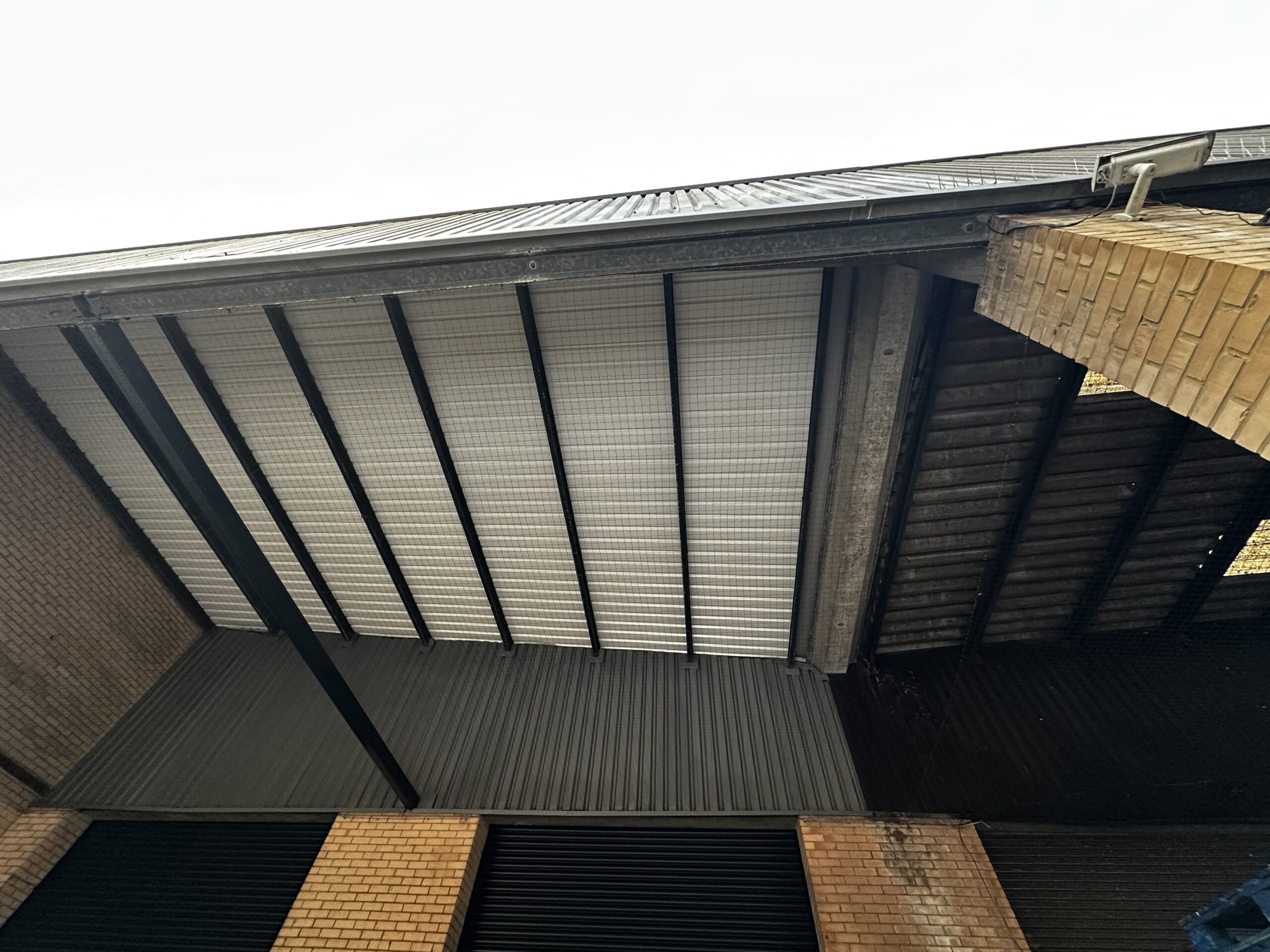
Pigeon netting – construction site canopy
A deteriorated canopy netting system was reinstated at a Barking construction site. Pigeons had been exploiting the failing installation to roost and nest. IBM enclosed the full canopy with high-quality bird netting, restoring protection with minimal disruption to site operations.
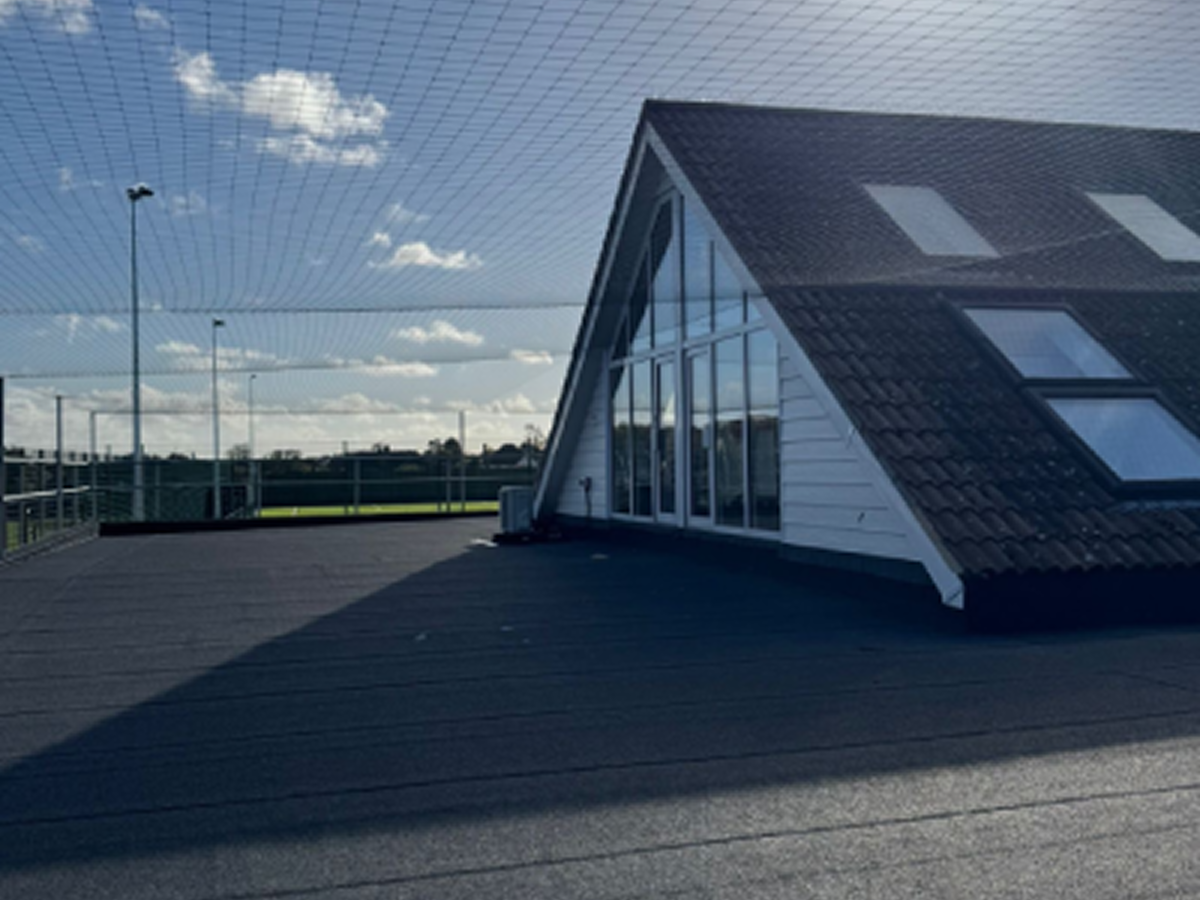
Roof netting – school building in South London
A roof net was installed at a South London school to prevent pigeons and gulls from roosting on the building. The netting provides a clean, discreet barrier that protects the roof without affecting the building’s appearance or the school’s daily operations.
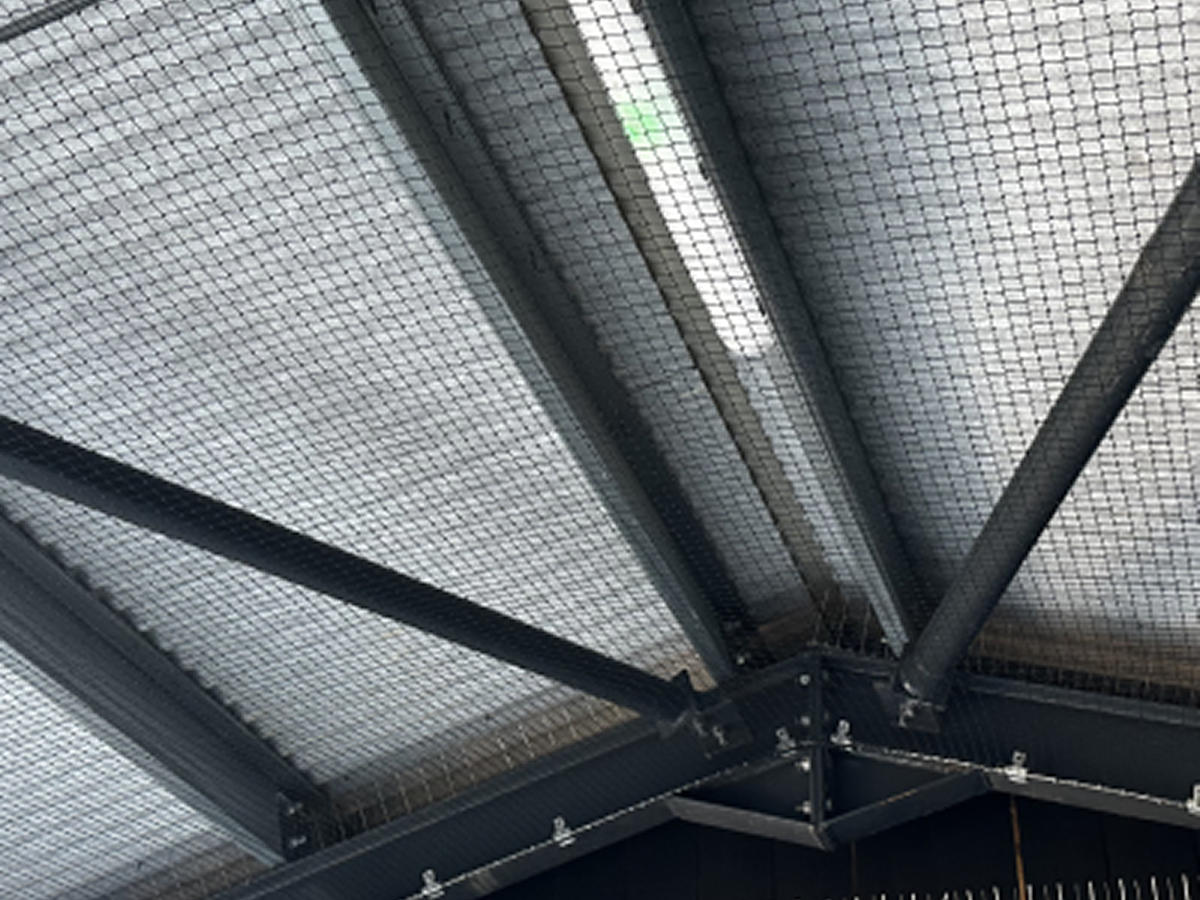
Pigeon netting – Vineyard / Domestic Property
Bird netting was installed to a yard store area at a new-build property near Winchester where pigeons had been nesting. The netting denied access to the roosting site, offering a humane solution that encourages birds to relocate without causing them harm.
Key Benefits:
Traditional Bird Control
Traditional bird control methods like bird netting and spikes have a long track record of significantly reducing pest bird activity. These bird deterrent systems physically block or discourage birds, providing immediate results in keeping areas bird-free.
All solutions are non-lethal and designed to deter birds without harm. Techniques such as mesh barriers and bio-acoustic systems simply encourage birds to relocate, aligning with wildlife protection laws and ethical practices.
Built with high-quality, weather-resistant materials, these systems offer long-term bird damage prevention with minimal upkeep. Once installed, bird netting, spikes, and meshes guard your property 24/7, reducing the need for constant cleaning or repairs.
From agricultural fields to urban rooftops, traditional bird control can be tailored to any setting. These bird deterrent solutions come in various sizes and configurations to fit buildings, warehouses, rooftops, signage, and open areas without affecting aesthetics or daily operations.
By keeping birds away, you prevent the accumulation of droppings and nesting debris that can corrode building materials and create health hazards.
FAQs
Traditional Bird Control
The right solution depends on the bird species, the type of property, and where the problem is occurring. Bird netting suits large open or enclosed areas. Spikes work well on ledges, beams, and signs. Mesh is used to seal gaps and voids. Bio-acoustic systems and hawk kites are effective across wide open spaces where physical barriers are not practical. Get in touch and the team can assess your site and recommend the most appropriate approach.
Most installations offer long-term protection, often lasting 5 to 10 years or more. Products are made from weather-resistant materials including stainless steel, UV-stabilised polymers, and heavy-duty mesh, designed to perform in exposed conditions with minimal maintenance.
Yes. All methods used by IBM are non-lethal and fully compliant with the Wildlife and Countryside Act 1981. The aim is to deter birds and deny access to roosting or nesting sites – not to harm them. No bird control work should be carried out in a way that injures birds or disturbs an active nest containing eggs or young.
Yes. Different species respond to different deterrents. Pigeons are typically controlled with netting, spikes, or mesh. Gulls often respond better to visual deterrents and bio-acoustic systems. Corvids on agricultural land may require a combination of approaches. A site assessment will identify the species involved and the most effective combination of methods.
Bird netting is typically used to exclude birds from larger open spaces such as warehouse rafters, loading bays, and roof voids. It creates a barrier across a wide area. Bird mesh is a heavier, more rigid material used to seal specific gaps, vents, eaves, and structural openings where birds are gaining entry. The two are often used together on the same site.
In most cases, no. Traditional bird control systems are installed with minimal disruption to daily activity. The team works around your operational requirements and, where necessary, can schedule installation outside of working hours.
Traditional systems are generally low maintenance once installed. It is worth having installations checked periodically to ensure netting remains intact, spikes are secure, and no new access points have opened up. IBM can advise on inspection frequency based on the site and the level of bird activity.
Yes. IBM operates nationally across England, Scotland, Wales, and Ireland. Get in touch to discuss your site, wherever it is located.
In most cases, planning permission is not required for bird control installations. However, if your building is listed or located within a conservation area, it is worth checking with your local planning authority before work begins. IBM can advise on this during the initial site assessment.
FAQs
Traditional Bird Control
The right solution depends on the bird species, the type of property, and where the problem is occurring. Bird netting suits large open or enclosed areas. Spikes work well on ledges, beams, and signs. Mesh is used to seal gaps and voids. Bio-acoustic systems and hawk kites are effective across wide open spaces where physical barriers are not practical. Get in touch and the team can assess your site and recommend the most appropriate approach.
Most installations offer long-term protection, often lasting 5 to 10 years or more. Products are made from weather-resistant materials including stainless steel, UV-stabilised polymers, and heavy-duty mesh, designed to perform in exposed conditions with minimal maintenance.
Yes. All methods used by IBM are non-lethal and fully compliant with the Wildlife and Countryside Act 1981. The aim is to deter birds and deny access to roosting or nesting sites – not to harm them. No bird control work should be carried out in a way that injures birds or disturbs an active nest containing eggs or young.
Yes. Different species respond to different deterrents. Pigeons are typically controlled with netting, spikes, or mesh. Gulls often respond better to visual deterrents and bio-acoustic systems. Corvids on agricultural land may require a combination of approaches. A site assessment will identify the species involved and the most effective combination of methods.
Bird netting is typically used to exclude birds from larger open spaces such as warehouse rafters, loading bays, and roof voids. It creates a barrier across a wide area. Bird mesh is a heavier, more rigid material used to seal specific gaps, vents, eaves, and structural openings where birds are gaining entry. The two are often used together on the same site.
In most cases, no. Traditional bird control systems are installed with minimal disruption to daily activity. The team works around your operational requirements and, where necessary, can schedule installation outside of working hours.
Traditional systems are generally low maintenance once installed. It is worth having installations checked periodically to ensure netting remains intact, spikes are secure, and no new access points have opened up. IBM can advise on inspection frequency based on the site and the level of bird activity.
Yes. IBM operates nationally across England, Scotland, Wales, and Ireland. Get in touch to discuss your site, wherever it is located.
In most cases, planning permission is not required for bird control installations. However, if your building is listed or located within a conservation area, it is worth checking with your local planning authority before work begins. IBM can advise on this during the initial site assessment.
Get a Quote
To provide you with the local support that you need, we rely on a network of trusted partners around the world. Please fill out the form below to begin.